Key Functions of a Float Collar
- Backflow Prevention
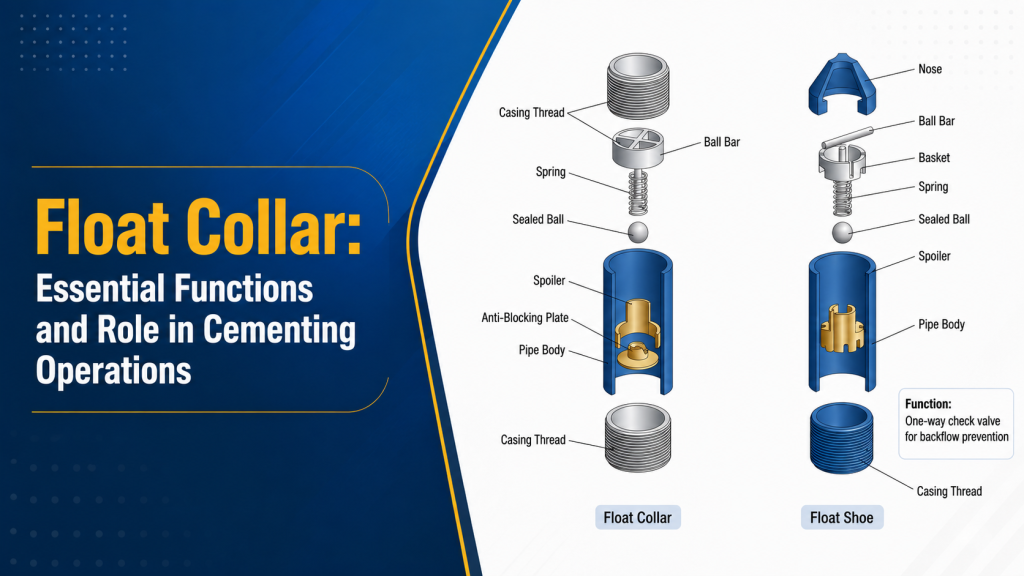
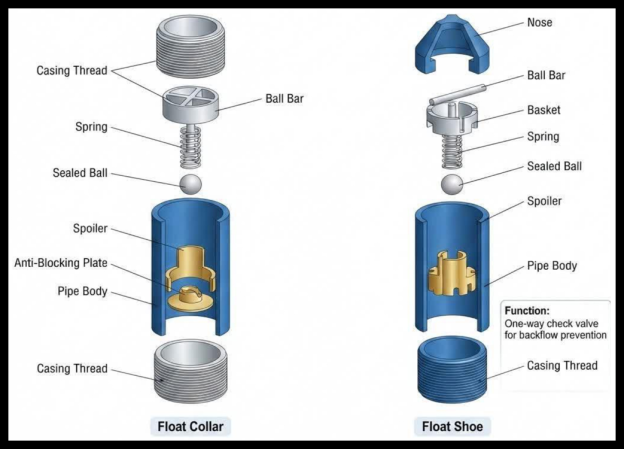
The most critical role of a float collar is preventing backflow. The internal check valve—typically a flapper or spring-loaded ball valve—allows drilling mud and cement to be pumped downward. However, it immediately closes to stop cement slurry from U-tubing or reverse-flowing into the casing, ensuring the cement stays exactly where it belongs.
- Precise Landing Point
The float collar acts as a solid, secure seat for cementing wiper plugs. As the wiper plug lands on this profile, the resulting pressure increase signals to the drilling team that the cement has been fully displaced, providing a clear marker for operational success.
- Buoyancy Effect
During the casing descent, the float collar helps keep the casing string hollow and filled with air. This creates a buoyancy effect that significantly reduces the overall load and friction on the drilling rig, making the lowering process safer and more efficient.
Common Variations
Engineers often select specific configurations based on well complexity:
Ultra-Reach Flotation Collar (URFC): Specifically designed for long extended-reach horizontal wells to maximize buoyancy in lateral sections.
Double Valve Configurations: Provide system redundancy, ensuring that if debris compromises the seal of one valve, the second maintains integrity.
Design for Drillability
Because the float collar is a temporary tool, its internal components are manufactured from high-strength, drillable materials—such as aluminum, phenolic, or composites. This ensures that once the cement has set, the drill bit can easily bore through the internal mechanism to continue drilling.
Conclusion
Understanding the mechanics of the float collar is essential for any professional involved in well construction. Mastery of these operational tools is what separates standard performance from engineering excellence.
Want to deepen your knowledge of well completion and drilling operations? Explore our comprehensive courses at TeachDemy and take the next step in your professional engineering journey!